Full Catalogue
CNC & VMC Cutting Tools
Search by ISO code (e.g. "TNMG 160404" or "TNMG160404") or filter by category, shape, operation and workpiece material. Sadguru Cutting Tools Solutions supplies availability and pricing on request — no prices are shown online.
Showing 50 of 50 products
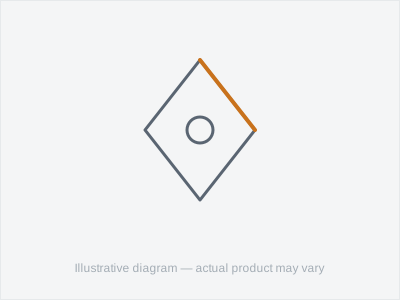
CNMG 120408
CNMG inserts use an 80° rhombic (diamond) shape with a negative rake geometry, giving a strong cutting edge that suits medium-to-heavy roughing as well as general external turning on steel, stainless steel and cast-iron components. The negative-type, double-sided design gives two usable cutting edges per face, which keeps the effective cost per edge competitive for job shops and production lines running multiple shifts.
CNMG 120404
CNMG inserts use an 80° rhombic (diamond) shape with a negative rake geometry, giving a strong cutting edge that suits medium-to-heavy roughing as well as general external turning on steel, stainless steel and cast-iron components. The negative-type, double-sided design gives two usable cutting edges per face, which keeps the effective cost per edge competitive for job shops and production lines running multiple shifts.
CNMG 120412
CNMG inserts use an 80° rhombic (diamond) shape with a negative rake geometry, giving a strong cutting edge that suits medium-to-heavy roughing as well as general external turning on steel, stainless steel and cast-iron components. The negative-type, double-sided design gives two usable cutting edges per face, which keeps the effective cost per edge competitive for job shops and production lines running multiple shifts.
TNMG 160404
TNMG inserts use a 60° triangular negative geometry, giving three cutting edges per face and a versatile approach-angle range that suits general and semi-finish turning across steel, stainless steel and cast-iron components. The triangular shape is a common first choice in job shops that need one insert style to cover several turning operations on a single machine.
TNMG 160408
TNMG inserts use a 60° triangular negative geometry, giving three cutting edges per face and a versatile approach-angle range that suits general and semi-finish turning across steel, stainless steel and cast-iron components. The triangular shape is a common first choice in job shops that need one insert style to cover several turning operations on a single machine.
TNMG 160412
TNMG inserts use a 60° triangular negative geometry, giving three cutting edges per face and a versatile approach-angle range that suits general and semi-finish turning across steel, stainless steel and cast-iron components. The triangular shape is a common first choice in job shops that need one insert style to cover several turning operations on a single machine.
CCMT 09T304
CCMT inserts use an 80° rhombic positive geometry. The positive rake reduces cutting forces compared with a negative insert, which makes this family a common choice for turning slender or thin-walled components, and for finishing passes on steel, stainless steel and non-ferrous parts where lower vibration and a sharper edge are useful.
CCMT 09T308
CCMT inserts use an 80° rhombic positive geometry. The positive rake reduces cutting forces compared with a negative insert, which makes this family a common choice for turning slender or thin-walled components, and for finishing passes on steel, stainless steel and non-ferrous parts where lower vibration and a sharper edge are useful.
CCMT 060204
CCMT inserts use an 80° rhombic positive geometry. The positive rake reduces cutting forces compared with a negative insert, which makes this family a common choice for turning slender or thin-walled components, and for finishing passes on steel, stainless steel and non-ferrous parts where lower vibration and a sharper edge are useful.
DCMT 11T304
DCMT inserts use a 55° rhombic positive geometry. The narrower point angle allows access into tighter profiles and contours, which makes this family a common choice for copy-turning and profiling operations, as well as finishing passes on steel, stainless steel and non-ferrous components.
DCMT 11T308
DCMT inserts use a 55° rhombic positive geometry. The narrower point angle allows access into tighter profiles and contours, which makes this family a common choice for copy-turning and profiling operations, as well as finishing passes on steel, stainless steel and non-ferrous components.
DNMG 150404
DNMG inserts use a 55° rhombic negative geometry, combining a narrower point angle with the edge strength of a negative-type insert. This family is commonly used for external turning and profiling operations on steel, stainless steel and cast-iron components where both accessibility and edge strength matter.
DNMG 150608
DNMG inserts use a 55° rhombic negative geometry, combining a narrower point angle with the edge strength of a negative-type insert. This family is commonly used for external turning and profiling operations on steel, stainless steel and cast-iron components where both accessibility and edge strength matter.
WNMG 080404
WNMG inserts use an 80° trigon (three-cornered) negative geometry, giving three cutting edges per face on a compact insert body. This family is a common, economical choice for general external turning and medium roughing on steel, stainless steel and cast-iron components.
WNMG 080408
WNMG inserts use an 80° trigon (three-cornered) negative geometry, giving three cutting edges per face on a compact insert body. This family is a common, economical choice for general external turning and medium roughing on steel, stainless steel and cast-iron components.
VBMT 160404
VBMT inserts use a 35° rhombic positive geometry. The sharp point angle is well suited to profiling and contour turning where the tool needs to follow a changing radius, and the positive rake keeps cutting forces low on slender components.
VBMT 160408
VBMT inserts use a 35° rhombic positive geometry. The sharp point angle is well suited to profiling and contour turning where the tool needs to follow a changing radius, and the positive rake keeps cutting forces low on slender components.
TCMT 16T304
TCMT inserts use a 60° triangular positive geometry. Three usable cutting edges per face combined with a positive rake make this family a practical, economical option for light turning and finishing passes across steel, stainless steel and non-ferrous materials.
TCMT 16T308
TCMT inserts use a 60° triangular positive geometry. Three usable cutting edges per face combined with a positive rake make this family a practical, economical option for light turning and finishing passes across steel, stainless steel and non-ferrous materials.
SNMG 120408
SNMG inserts use a square (90°) negative geometry, giving the strongest possible cutting edge angle among common turning-insert shapes. This makes the family well suited to heavy roughing and high feed-rate turning on steel, stainless steel and cast-iron components where edge strength matters more than access to fine contours.
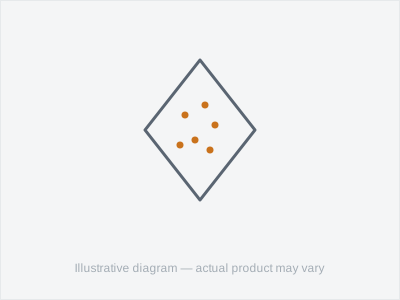
CCMW 09T304 PCD
This insert body uses a PCD (polycrystalline diamond) cutting tip rather than a solid carbide edge. PCD tooling is used specifically for aluminium and other non-ferrous, abrasive materials, where it offers substantially longer tool life between changeovers than carbide at comparable cutting speeds. It is not suitable for machining ferrous materials such as steel or cast iron.
CCGT 09T304 Aluminium
CCGT inserts are precision-ground, sharp-edged positive inserts developed for aluminium and other non-ferrous materials. The polished flute and sharp cutting edge help produce a good surface finish and reduce built-up edge, which is a common issue when machining soft, gummy aluminium alloys with the wrong insert geometry.
CCGT 09T308 Aluminium
CCGT inserts are precision-ground, sharp-edged positive inserts developed for aluminium and other non-ferrous materials. The polished flute and sharp cutting edge help produce a good surface finish and reduce built-up edge, which is a common issue when machining soft, gummy aluminium alloys with the wrong insert geometry.
DCGT 11T304 Aluminium
DCGT inserts combine a 55° rhombic positive geometry with a precision-ground, sharp cutting edge developed for aluminium and other non-ferrous materials. The narrower point angle suits profile and contour turning where the tool must follow a changing diameter.
TCGT 16T304 Aluminium
TCGT inserts pair a 60° triangular positive geometry with a precision-ground, sharp cutting edge intended for aluminium and other non-ferrous materials, giving three usable cutting edges for light finishing work.
VCGT 160404 Aluminium
VCGT inserts combine a 35° rhombic positive geometry with a precision-ground, sharp cutting edge intended for aluminium and other non-ferrous materials, giving access to tighter contours during profile turning.
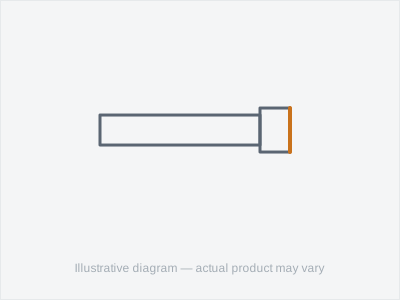
MGMN 200
MGMN inserts are used for external grooving and parting-off operations. The number following the family code sets the groove width, so the correct insert is selected to match the groove or part-off width required by the drawing.
MGMN 300
MGMN inserts are used for external grooving and parting-off operations. The number following the family code sets the groove width, so the correct insert is selected to match the groove or part-off width required by the drawing.
MGMN 400
MGMN inserts are used for external grooving and parting-off operations. The number following the family code sets the groove width, so the correct insert is selected to match the groove or part-off width required by the drawing.
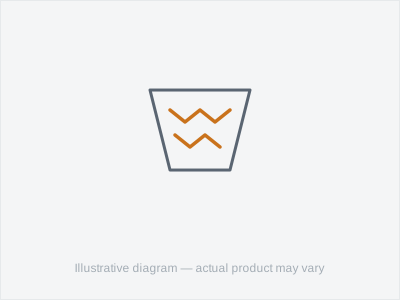
16ER AG60
This is an external threading insert sized to the 16 mm shank/holder series. The profile designation that follows (such as a thread angle or pitch reference) sets which thread form the insert is ground to cut.
16IR AG60
This is an internal threading insert sized to the 16 mm boring-bar series, used to cut threads inside a bored hole. The profile designation that follows sets which thread form the insert is ground to cut.
16ER 1.5 ISO
This is an external threading insert sized to the 16 mm shank/holder series. The profile designation that follows (such as a thread angle or pitch reference) sets which thread form the insert is ground to cut.
16IR 1.5 ISO
This is an internal threading insert sized to the 16 mm boring-bar series, used to cut threads inside a bored hole. The profile designation that follows sets which thread form the insert is ground to cut.
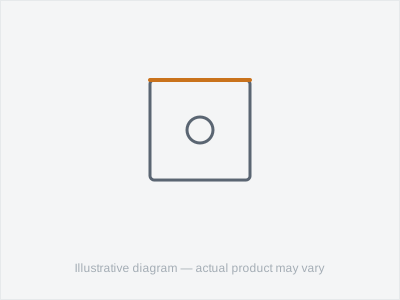
APMT 1135
APMT inserts are positive-geometry milling inserts commonly used in face and shoulder milling cutters. The positive rake keeps cutting forces lower than an equivalent negative insert, which helps on lighter-duty machines and thinner-walled workpieces.
APMT 1604
APMT inserts are positive-geometry milling inserts commonly used in face and shoulder milling cutters. The positive rake keeps cutting forces lower than an equivalent negative insert, which helps on lighter-duty machines and thinner-walled workpieces.
APKT 1604
APKT inserts are positive-geometry milling inserts used in face and shoulder milling cutter bodies, similar in application to the APMT family but with a different clamping/hole configuration as set out by the insert's ISO type letter.
SEKT 1204
SEKT inserts use a square cutting geometry commonly used in face milling cutter bodies, giving four usable cutting edges per insert for general-purpose milling on steel, stainless steel and cast iron.
RPMT 1204
RPMT inserts use a round cutting geometry, which is useful for profile milling, plunge milling and producing fillets or radii that a straight-edged insert cannot form directly.
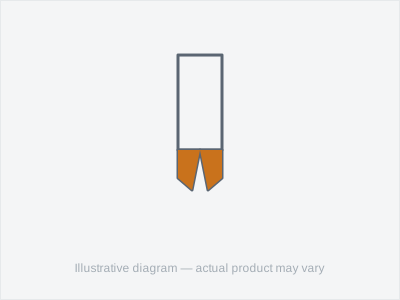
SPMT 060204
SPMT inserts are used in indexable insert drills, typically as the peripheral or central cutting insert. Indexable drilling is common on VMC and CNC turning centres where hole-making needs to be fast and the inserts replaced quickly without regrinding.
SPMT 07T308
SPMT inserts are used in indexable insert drills, typically as the peripheral or central cutting insert. Indexable drilling is common on VMC and CNC turning centres where hole-making needs to be fast and the inserts replaced quickly without regrinding.
SPMT 09T308
SPMT inserts are used in indexable insert drills, typically as the peripheral or central cutting insert. Indexable drilling is common on VMC and CNC turning centres where hole-making needs to be fast and the inserts replaced quickly without regrinding.
XOMT Drill Insert
XOMT is an indexable drilling insert style used in insert-type drill bodies for hole-making on VMC and CNC machines, offering quick insert replacement without regrinding the drill body itself.
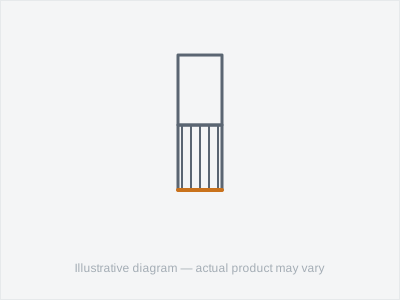
6 mm Solid Carbide End Mill
A 6 mm diameter solid carbide end mill for general-purpose milling on VMC and CNC machining centres. Solid carbide construction gives higher rigidity and better heat resistance than an equivalent HSS tool, allowing higher cutting speeds on steel, stainless steel, cast iron and aluminium components.
8 mm Solid Carbide End Mill
A 8 mm diameter solid carbide end mill for general-purpose milling on VMC and CNC machining centres. Solid carbide construction gives higher rigidity and better heat resistance than an equivalent HSS tool, allowing higher cutting speeds on steel, stainless steel, cast iron and aluminium components.
10 mm Solid Carbide End Mill
A 10 mm diameter solid carbide end mill for general-purpose milling on VMC and CNC machining centres. Solid carbide construction gives higher rigidity and better heat resistance than an equivalent HSS tool, allowing higher cutting speeds on steel, stainless steel, cast iron and aluminium components.
12 mm Solid Carbide End Mill
A 12 mm diameter solid carbide end mill for general-purpose milling on VMC and CNC machining centres. Solid carbide construction gives higher rigidity and better heat resistance than an equivalent HSS tool, allowing higher cutting speeds on steel, stainless steel, cast iron and aluminium components.
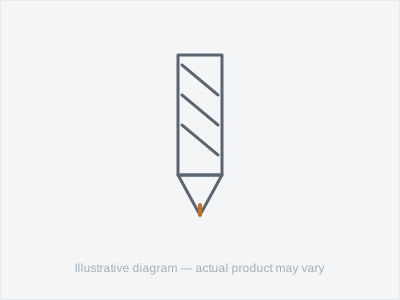
6 mm Solid Carbide Drill
A 6 mm diameter solid carbide drill for general-purpose hole-making on VMC and CNC machines. Solid carbide construction allows higher cutting speeds and better hole finish than an equivalent HSS drill, with good rigidity for depth-to-diameter ratios common in general engineering work.
8 mm Solid Carbide Drill
A 8 mm diameter solid carbide drill for general-purpose hole-making on VMC and CNC machines. Solid carbide construction allows higher cutting speeds and better hole finish than an equivalent HSS drill, with good rigidity for depth-to-diameter ratios common in general engineering work.
10 mm Solid Carbide Drill
A 10 mm diameter solid carbide drill for general-purpose hole-making on VMC and CNC machines. Solid carbide construction allows higher cutting speeds and better hole finish than an equivalent HSS drill, with good rigidity for depth-to-diameter ratios common in general engineering work.
12 mm Solid Carbide Drill
A 12 mm diameter solid carbide drill for general-purpose hole-making on VMC and CNC machines. Solid carbide construction allows higher cutting speeds and better hole finish than an equivalent HSS drill, with good rigidity for depth-to-diameter ratios common in general engineering work.